

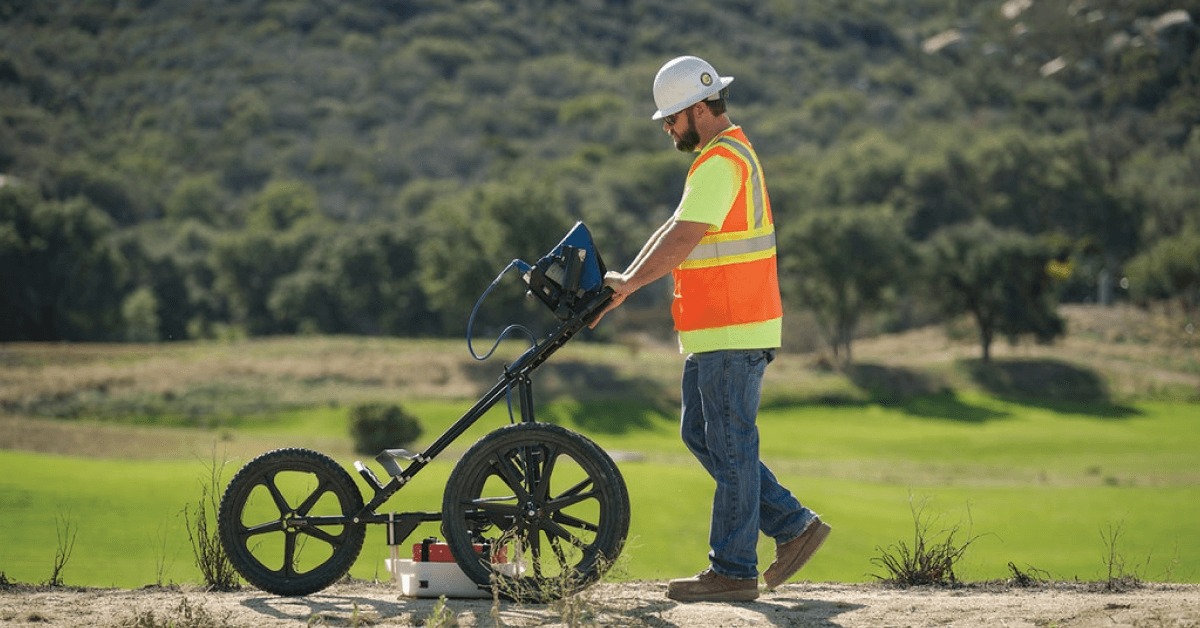
You wouldn’t undergo major surgery without the surgeon first looking at an X-ray, CT scan, or MRI. To do so would be reckless, a blind gamble with your health. In the world of construction, breaking ground without a comprehensive soil investigation is the exact same gamble. It’s an attempt to build a multi-million Ringgit project on a foundation of complete uncertainty.
In Malaysia, with our diverse and often challenging geology from the soft marine clays of the west coast to the granitic hills of the Titiwangsa Range—understanding what lies beneath the surface isn’t just good practice; it’s the absolute cornerstone of a safe and successful project.
Read : Guide to MRT Construction Soft Soil Treatment in Malaysia
Problem : Perilous Assumption of “Solid Ground”
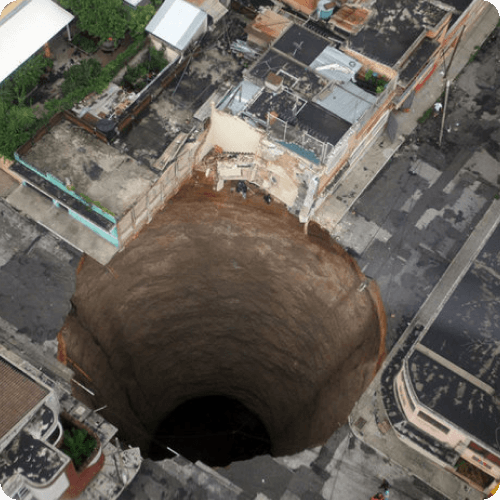
Every developer’s nightmare begins with a seemingly perfect plot of land. The location is prime, the topography looks manageable. But unseen, just meters below the surface, lies a hidden weakness: a deep layer of peat, a network of limestone cavities, or a high water table that turns stable soil into a soupy mess during the monsoon.
Building on such ground without knowledge is not a matter of if things will go wrong, but when and how badly. The common assumption that “ground is just ground” is the root cause of countless construction failures.
Read : 5 Types of Soil Investigation Test by Geotechnica (LATEST)
Agony : When the Earth Fights Back
The consequences of skipping or skimping on a proper soil investigation can be devastating. We’ve all seen the headlines.
“We were developing a series of terrace houses on what seemed like firm, flat land,” laments a (fictional) contractor from Johor. “We did a few basic probe tests and everything looked fine. But we missed the fact that the area was reclaimed swampland. A few years after residents moved in, the differential settlement began. Cracks appeared in the walls, doors wouldn’t close properly, and drains started to break. The cost of underpinning and repairing the damage was astronomical, not to mention the damage to our reputation. A proper set of boreholes would have told us everything we needed to know from the start.”
This is the harsh reality. As reported by news outlets like BERNAMA, incidents of slope failure and structural damage are often traced back to an inadequate understanding of the subsurface conditions. Without data, you’re not engineering; you’re gambling.
Solution : Diagnostic Toolkit for the Ground
A professional soil investigation is a systematic process of discovery. It’s a multi-stage “health check-up” for your site. Here are the key methods used in Malaysia to give you a clear picture of what you’re building on.
Phase 1: Reconnaissance
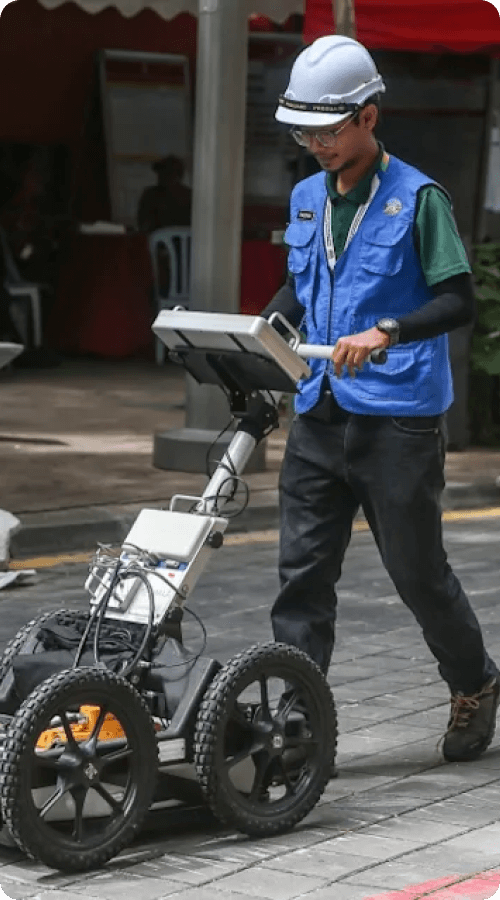
- Desk Study & Walkover Survey: The process starts in the office, reviewing geological maps, past site records, and aerial photographs. This is followed by a walkover survey to look for physical signs like soil type, vegetation, signs of past landslides, and drainage patterns. This is a core component of geoforensics assessment.
Phase 2: In-situ (On-Site) Testing
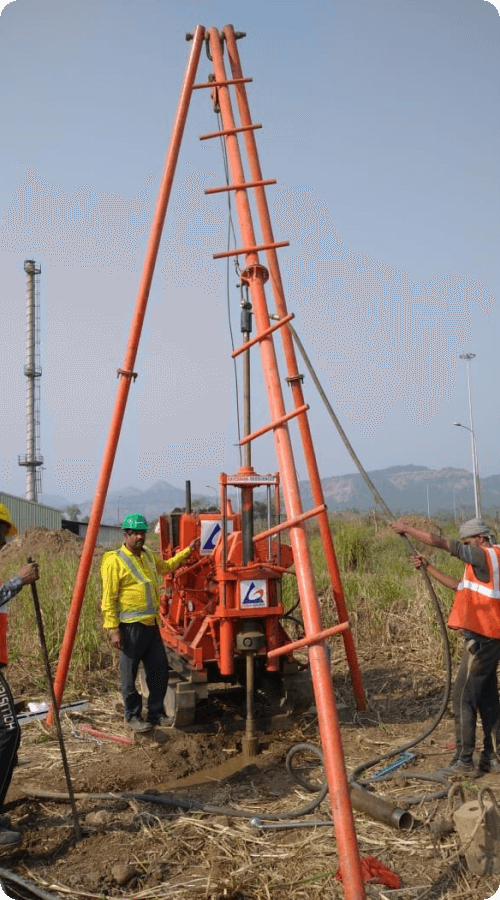
- Boreholes (with SPT): This is the gold standard. A drilling rig bores deep into the ground, retrieving soil samples at regular intervals. During this process, the Standard Penetration Test (SPT) is performed. This involves driving a standard sampler into the soil with a hammer of a specific weight, measuring the blows needed to penetrate a certain distance. The “N-value” from this test is a crucial indicator of soil density and strength.
- Mackintosh & JKR Probes: These are lighter, more portable tests used for preliminary investigations. They involve driving a small steel cone into the ground and counting the number of blows per foot. They are fast and cost-effective for assessing ground consistency at shallow depths.
- Plate Load Test: This test directly measures the soil’s bearing capacity by applying a load to a steel plate on the ground and measuring the settlement.
Phase 3: Laboratory Testing
- The soil samples collected from the boreholes are sent to a lab. Here, they undergo a battery of tests to determine their properties: moisture content, particle size distribution (sieve analysis), strength (triaxial test) and compressibility (consolidation test).
Read : 6 Process in Soil Investigation Report by Geotechnica
Geologist Data is What You Need
This comprehensive process delivers a Geotechnical Investigation Report. This is your project’s most important document. It provides:
- A detailed log of the soil layers (stratigraphy).
- The strength and bearing capacity of the soil.
- The groundwater level.
- Crucial recommendations for the most suitable, safe, and cost-effective foundation design.
The data collected also serves as a vital layer of information for our geological terrain mapping services.
Transformation: Build with Data-Backed Confidence
With a professional geotechnical report in hand, the entire dynamic of your project changes. Uncertainty is replaced with data. Your structural engineer can design a foundation that is not over-engineered (which wastes money) or under-engineered (which is dangerous). You can accurately budget for earthworks and foundation costs. You can confidently secure approvals from local authorities, who require this due diligence.
A proper soil investigation is the single most valuable investment you can make in the pre-construction phase. It’s the blueprint that ensures the safety, stability, and longevity of everything you build upon it. In Malaysia’s varied and challenging ground, it is absolutely non-negotiable.
Don’t let your project become another cautionary tale. A thorough soil investigation is the first and most critical step to securing your investment. The Geotechnica team is ready to assist and guide you through the essential methods needed to understand the ground beneath your feet. Contact Geotechnica for a comprehensive site investigation plan and build with absolute confidence.

